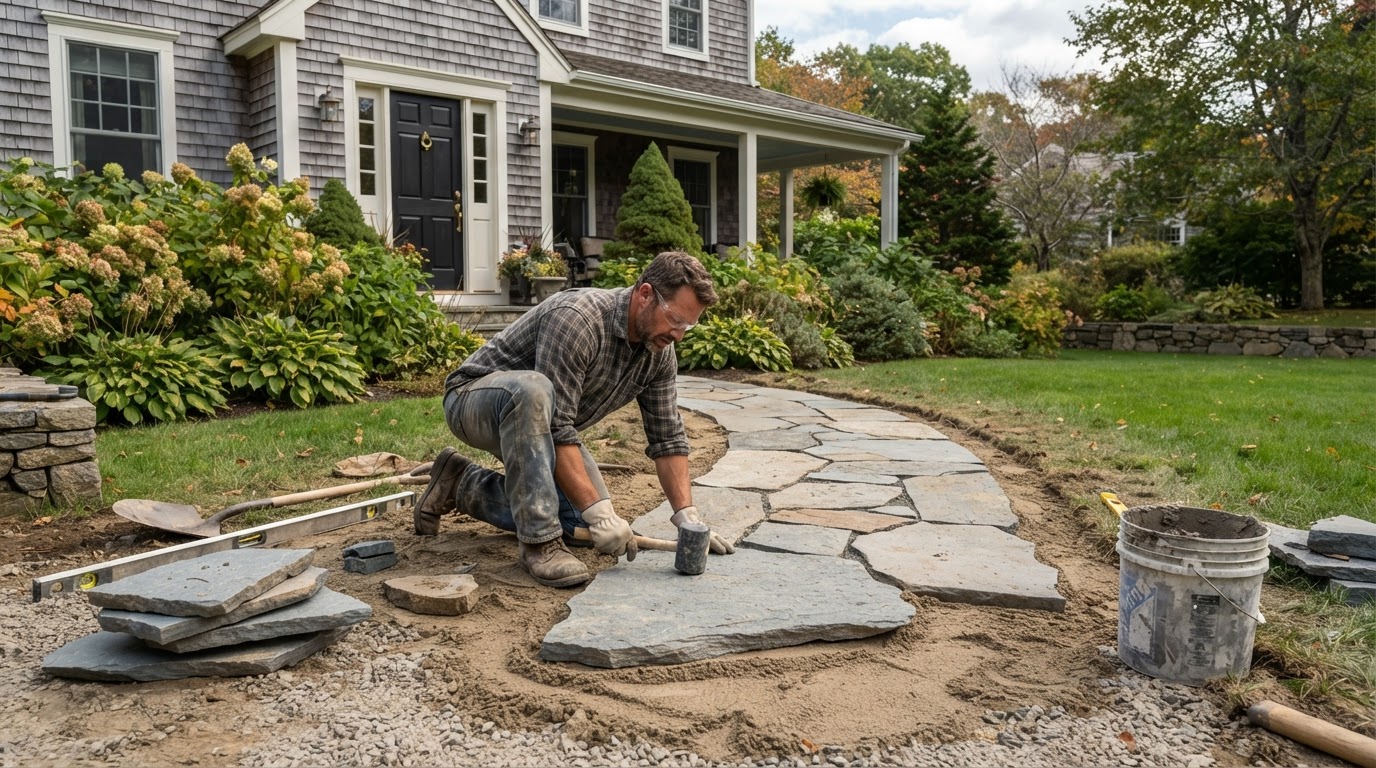
Walkway Installation in Milford, MA | 10+ Years Experience
Milford Masonry Pros installs paver, bluestone, and natural-stone walkways in Milford, Massachusetts. With 10+ years of hands-on experience and insured service, we build pedestrian paths that connect driveways, entries, patios, and outdoor-use areas with stable, durable surfaces.
Walkways need stable base preparation, intentional pitch, appropriate joint and edge treatment, and clean transitions at entries, drives, patios, and steps. Massachusetts freeze-thaw, snow and ice, drainage, and seasonal ground movement are real factors that make base and water management essential to a walkway that stays level. We focus on residential pedestrian masonry surfaces.
Why Choose Milford Masonry Pros for Your Masonry Project?
10+ Years Experience
More than a decade of walkway installation across Milford and surrounding Massachusetts communities, from paver entry paths to natural-stone garden walkways.
Insured
Milford Masonry Pros carries insurance so your property and project are protected while walkway work is underway.
Stable Base Preparation
Excavation, subgrade evaluation, compacted aggregate base, and bedding layer are treated as the structural foundation, because the surface follows whatever the base does over time.
Drainage and Pitch Awareness
Surface pitch, drainage direction, and transitions are planned so water sheds off the walkway rather than pooling or undermining the base through freeze-thaw.
Entry and Step-Transition Planning
Transitions to doors, steps, driveways, and patios are planned as part of the layout so elevations match and the path integrates cleanly with the house and landscape.
Paver, Bluestone, and Natural-Stone Options
Experience with concrete pavers, bluestone, and natural stone, including curves, cuts, joint treatment, and edge restraint appropriate to each material.
Transparent Square-Foot Pricing
You see defensible per-square-foot and project ranges up front with the real price drivers named, and a written estimate after evaluation.
Local Climate and Service Familiarity
We understand Massachusetts freeze-thaw, snow and ice exposure, and the drainage and base conditions that determine whether a walkway stays level or settles.
Our Specialized Walkway Services
Paver Walkways
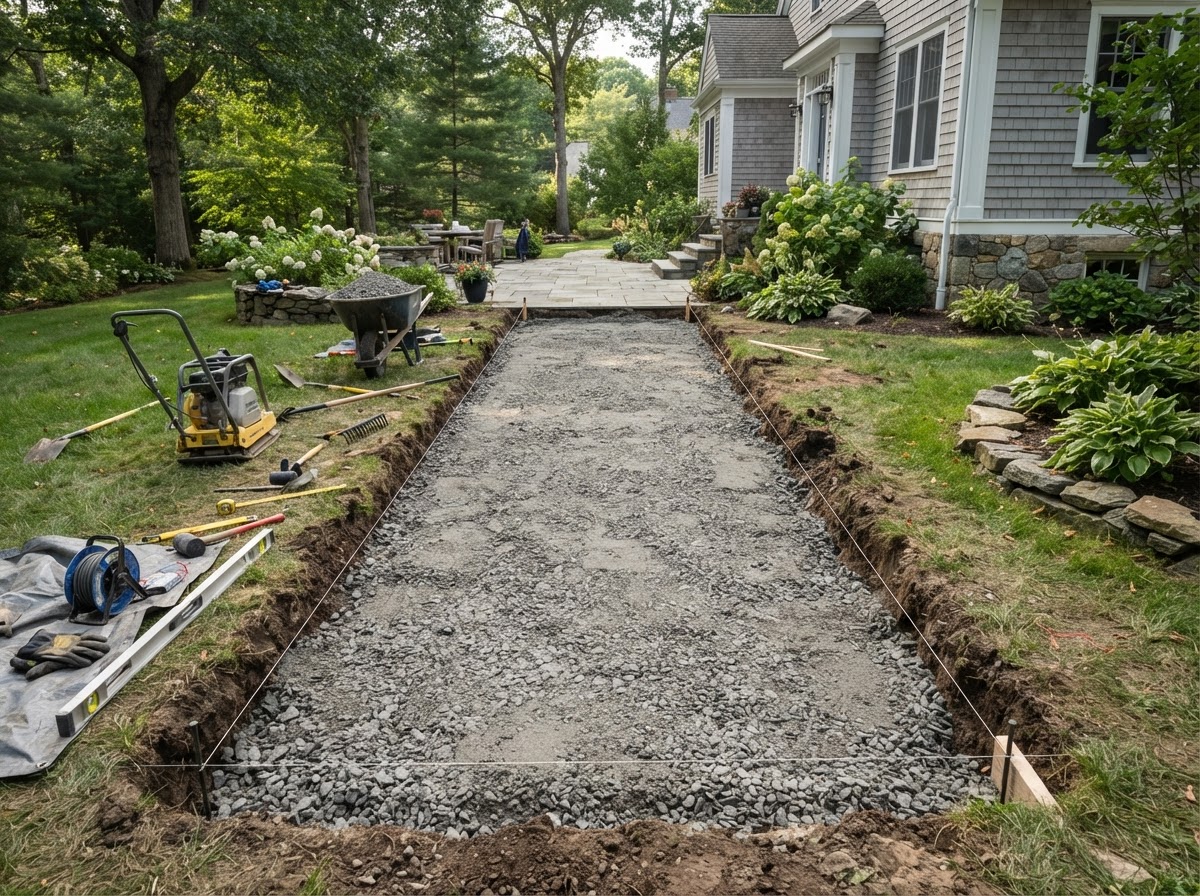
Paver walkways are built to connect driveways, front entries, patios, side yards, gardens, and other pedestrian areas at Milford homes. They apply wherever a defined, durable footpath is needed for residential use.
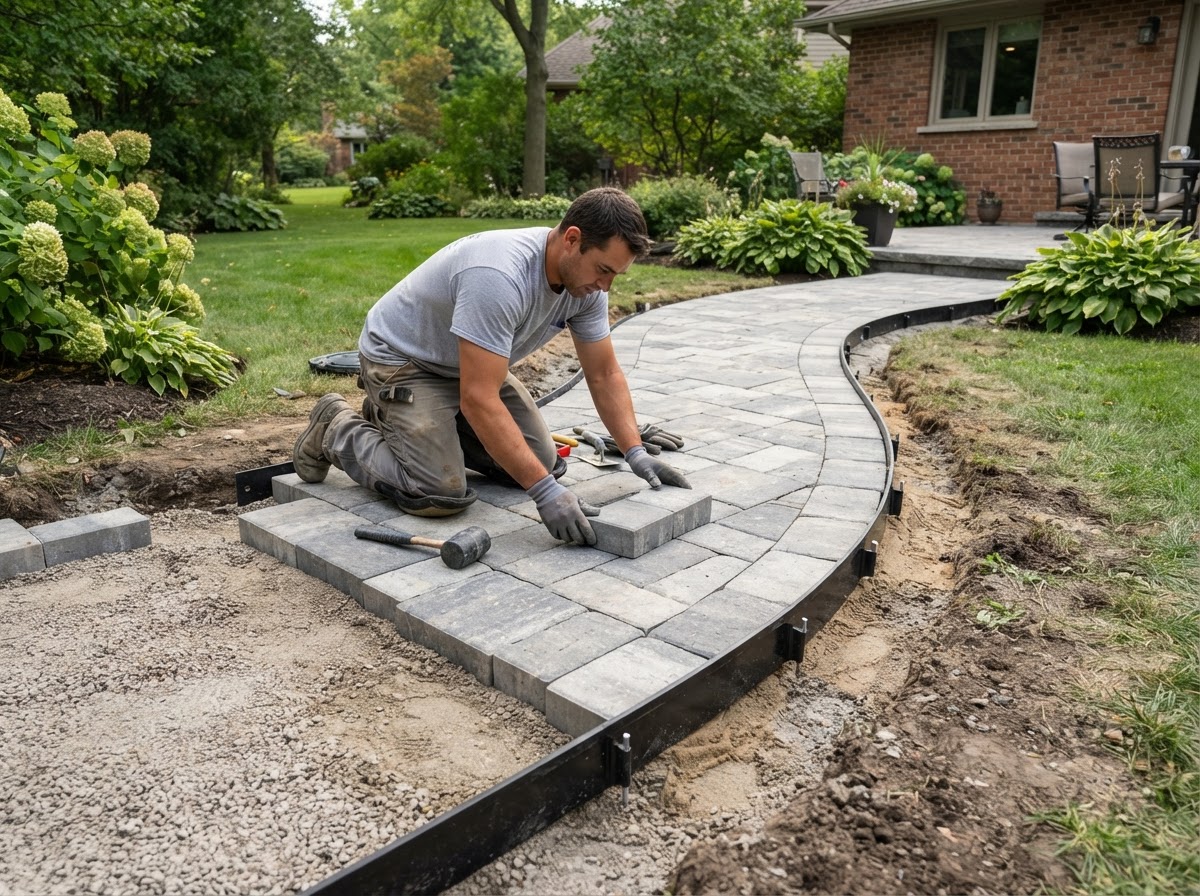
Construction involves excavation, compacted base, bedding layer, paver layout, curves and cuts, edge restraint, pitch for drainage, joint material, and final compaction as appropriate to the selected paver system.
A defined walkway with stable support, controlled edges, and a finished pattern that connects exterior spaces cleanly and stays level through seasonal movement.
Bluestone Walkways
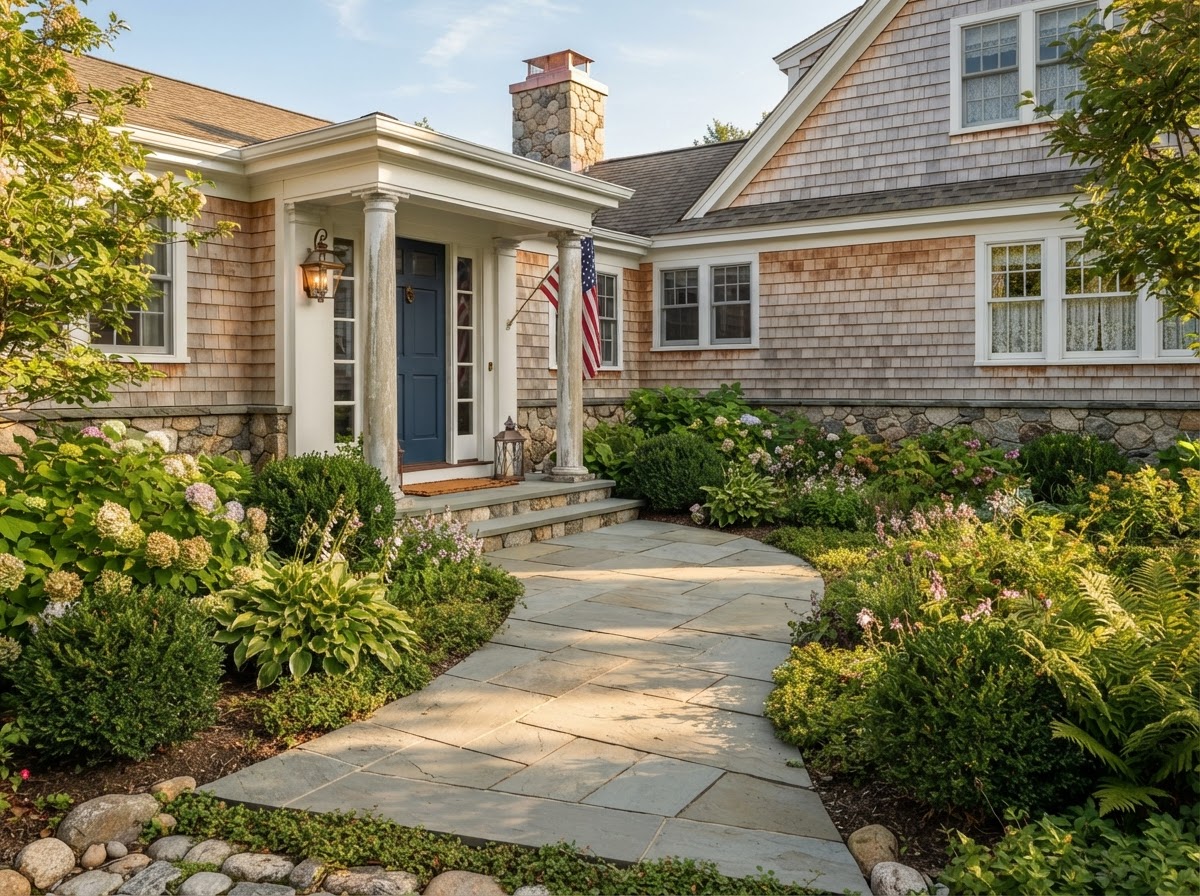
Bluestone walkways are installed for homeowners who want a natural-stone path with a classic New England appearance. They apply where the character of natural stone is preferred over manufactured pavers.
The build uses base preparation, stone layout, cuts for fit, joint treatment, pitch for drainage, and careful transitions at steps, driveways, and door landings so elevations match and water sheds off.
A durable natural-stone walking surface with deliberate joints and property-specific alignment that complements regional architecture and handles New England exposure.
Natural-Stone Garden and Entry Walkways
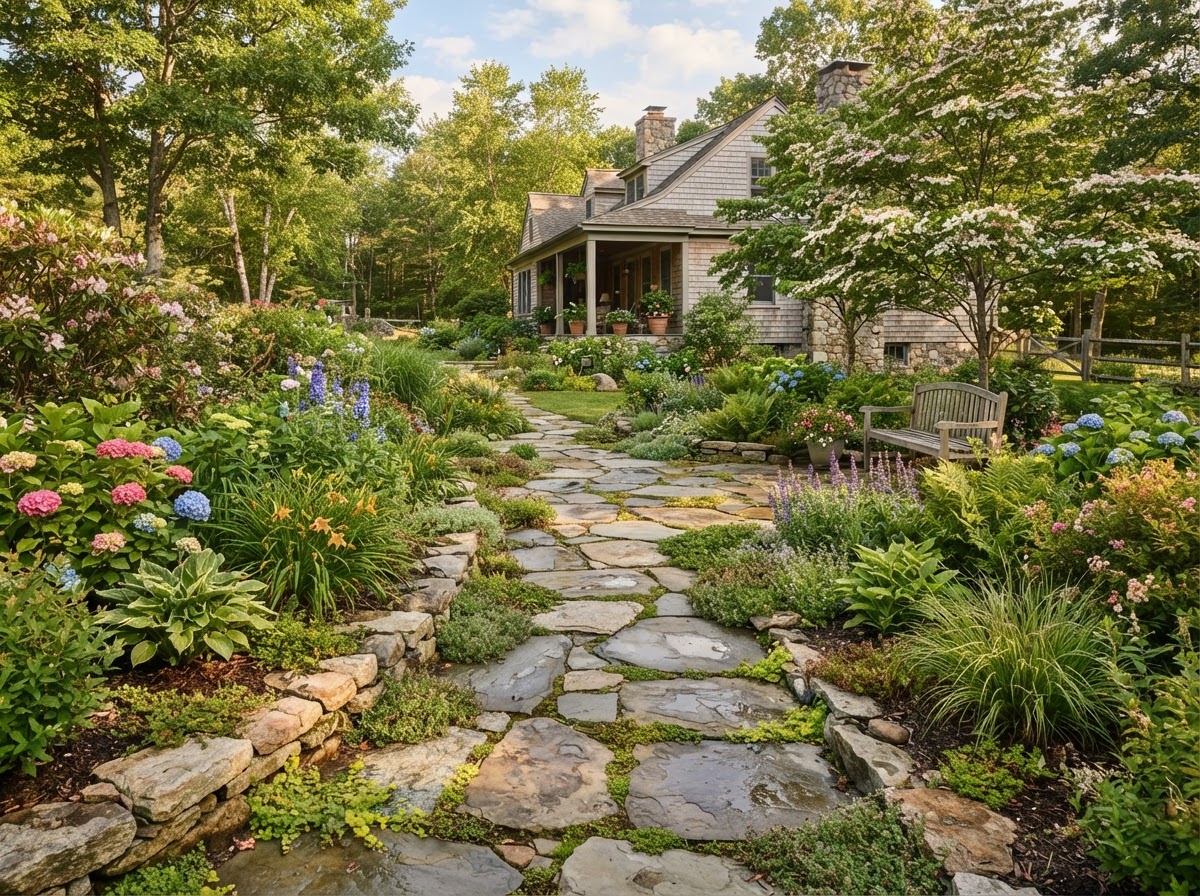
Natural-stone garden and entry walkways are built for gardens, side yards, secondary entries, and landscape connections. They apply where an organic, varied stone path fits the landscape better than formal pavers.
Construction involves material selection, subgrade and base preparation, fitted layout, joint treatment, drainage, and edge transitions based on the stone type and intended use of the path.
A visually integrated path that provides a clear route through landscaped areas without looking like an afterthought, built on a stable base that resists settling.
Walkway Replacement and Rebuilding
Walkway replacement and rebuilding rebuilds walkways with widespread settlement, displaced units, drainage issues, failing edge restraint, or an unsuitable base. It applies when a walkway has failed beyond spot leveling.
The process includes removal and resetting or replacement of surface materials, correction of base and grade issues, reuse of sound materials where practical, and restoration of joints and edges on a corrected foundation.
The new or rebuilt walkway addresses the underlying support and drainage problem rather than only masking uneven spots, producing a path that stays level because the base is sound.
Common Walkway Problems and Planning Factors
Uneven or Settled Sections
Uneven or settled sections develop when the base shifts or washes out beneath the surface, creating trip-prone low spots. Correcting the base through excavation and recompaction is more durable than relaying material over the same failing foundation.
Poor Drainage or Ponding
Poor drainage or ponding allows water to collect on or along the walkway, undermining the base through freeze-thaw and erosion. Pitch and drainage paths are planned so water sheds off the surface and away from the path.
Edge Movement
Edge movement occurs when edge restraint is missing or has failed, allowing pavers or stone to spread outward and joints to open. Proper edge restraint keeps the surface contained and the pattern intact over time.
Difficult Step or Door Transitions
Difficult step or door transitions create awkward elevation changes that affect both safety and appearance. Planning transitions as part of the layout ensures elevations match and the path meets entries cleanly.
Curves, Width, and Landscape Constraints
Curves, width, and landscape constraints affect material layout, cutting, and cost because irregular shapes require more fitting labor than straight runs. The route is planned to balance function, appearance, and efficient material use.
Signs You Need a New or Rebuilt Walkway
Repeated Trip-Prone Unevenness
Repeated trip-prone unevenness means the surface has settled or heaved enough to create a safety concern, not just a cosmetic one. Rebuilding with a corrected base restores a level, safe walking surface.
Water Collects Along the Path
Water collecting along the path indicates a pitch or drainage problem that will worsen with freeze-thaw. Rebuilding with corrected drainage and slope moves water off the walkway and prevents base erosion.
Existing Materials Shift After Repairs
Existing materials shifting after repairs means the base is not holding them in place. A rebuild that corrects the base provides a stable foundation so the surface stops moving.
Entry Route Is Poorly Defined
An entry route that is poorly defined leaves visitors and residents without a clear, durable path to the door. A new walkway creates a defined, stable route that improves access and curb appeal.
Walkway No Longer Connects Exterior Spaces Effectively
A walkway that no longer connects exterior spaces effectively may warrant a rebuild that reconfigures the route, width, or transitions. A new layout on a proper base better serves how the yard is currently used.
Our Walkway Installation Process
Assessment and Layout
We review route, width, grades, entries, step and driveway transitions, drainage, surface choice, curves, and access. The layout establishes the path, elevations, and drainage plan before any excavation begins.
Excavation and Base Preparation
We remove unsuitable material as scoped, establish the subgrade, install and compact the aggregate base, and set finished elevations. Base depth and compaction are matched to the soil and load conditions to prevent future settlement and heaving.
Walkway Surface Installation
We install pavers or stone with planned alignment, cuts, curves, pitch, jointing, and edge system. The surface is set to the planned lines and elevations so the path integrates cleanly with the house and landscape.
Finishing and Quality Control
We complete joints, edges, transitions, cleanup, and a final walkthrough. The review confirms the surface is flat, joints are filled, edges are secure, and transitions to entries and steps are clean.
How Much Does a Walkway Cost in Milford, MA?
Paver walkways: commonly about $20 to $35+ per square foot
Notes: Width, paver selection, excavation, base, curves, borders, cuts, access, and demolition affect cost.
Bluestone walkways: commonly about $25 to $45+ per square foot
Notes: Stone type, pattern, cuts, joints, base, landings, steps, and access affect pricing.
Natural-stone walkways: commonly about $25 to $50+ per square foot
Notes: Material type, fitting labor, layout, excavation, base, grading, and joints influence cost.
Smaller entry walkway projects: often about $2,500 to $7,500+
Notes: Fixed mobilization, demolition, base preparation, material and step/landing transitions drive small-project totals.
Ranges reflect typical Milford-area market conditions and are provided to help you plan. Your written estimate will reflect your specific property, materials, and scope.
Walkways with steps, landings, retaining edges, or complex curves can exceed these ranges. Ranges reflect typical Milford-area market conditions; your written estimate reflects your specific property and scope.
Get Your Walkway Estimate
Tell us about your Milford-area masonry project and we'll follow up with a clear next step.10+ Years Experience · Insured.
Call 508-458-8256Frequently Asked Questions About Walkway Installation
How much does a walkway cost in Milford?
A paver walkway in Milford commonly costs about $20 to $35+ per square foot, while a bluestone walkway runs $25 to $45+ and a natural-stone walkway $25 to $50+. Smaller entry walkway projects often fall between $2,500 and $7,500. Final pricing depends on width, material, excavation, base, curves, cuts, access, and step or landing transitions.
Is bluestone or paver better for a walkway?
Bluestone and concrete pavers each have tradeoffs rather than one being universally better. Bluestone offers a natural-stone look and regional character at a higher price, while pavers offer more pattern and color options at a lower cost with easier unit replacement. The right choice depends on budget, style, and how the path will be used.
Why do masonry walkways become uneven?
Masonry walkways become uneven most often because the base was under-prepared, under-compacted, or lacked proper drainage, allowing the surface to follow a shifting foundation. Root or soil movement and freeze-thaw cycling can also displace units. Correcting the base and drainage is what keeps the surface flat over time.
What base goes under a paver or stone walkway?
A compacted crushed-stone aggregate base over prepared subgrade goes under a paver or stone walkway, with a bedding leveling layer on top and edge restraint where the material requires it. Proper base depth and compaction prevent the settling and heaving that make walkways uneven through New England winters.
How do you keep water from pooling on a walkway?
Water is kept from pooling on a walkway through surface pitch that sheds water off the path, combined with base and edge details that prevent undermining. The finished elevations are set so water moves toward lawn or drainage paths rather than collecting on the walking surface.
Can an old walkway be rebuilt using the existing stone or pavers?
An old walkway can often be rebuilt using existing stone or pavers when the materials are sound and practical to reset, which preserves the original surface and reduces new material cost. The base is corrected before any reusable material is relaid so the new walkway does not repeat the old failure.
How do I request a walkway estimate?
To request a walkway estimate, call 508-458-8256 or submit the estimate form on this page with your name, phone, email, project address, and service request. We review your request, schedule a site evaluation to review route and grade, and follow up with a clear written estimate and next steps.
Request Walkway Installation in Milford, MA
Ready to move forward? Call now or send your details and we'll help you take the next step with confidence. 10+ Years Experience · Insured.
Call 508-458-8256Related Masonry Services
Prefer to talk it through? Call 508-458-8256.