Stone Step Installation in Milford, MA | 10+ Years Experience
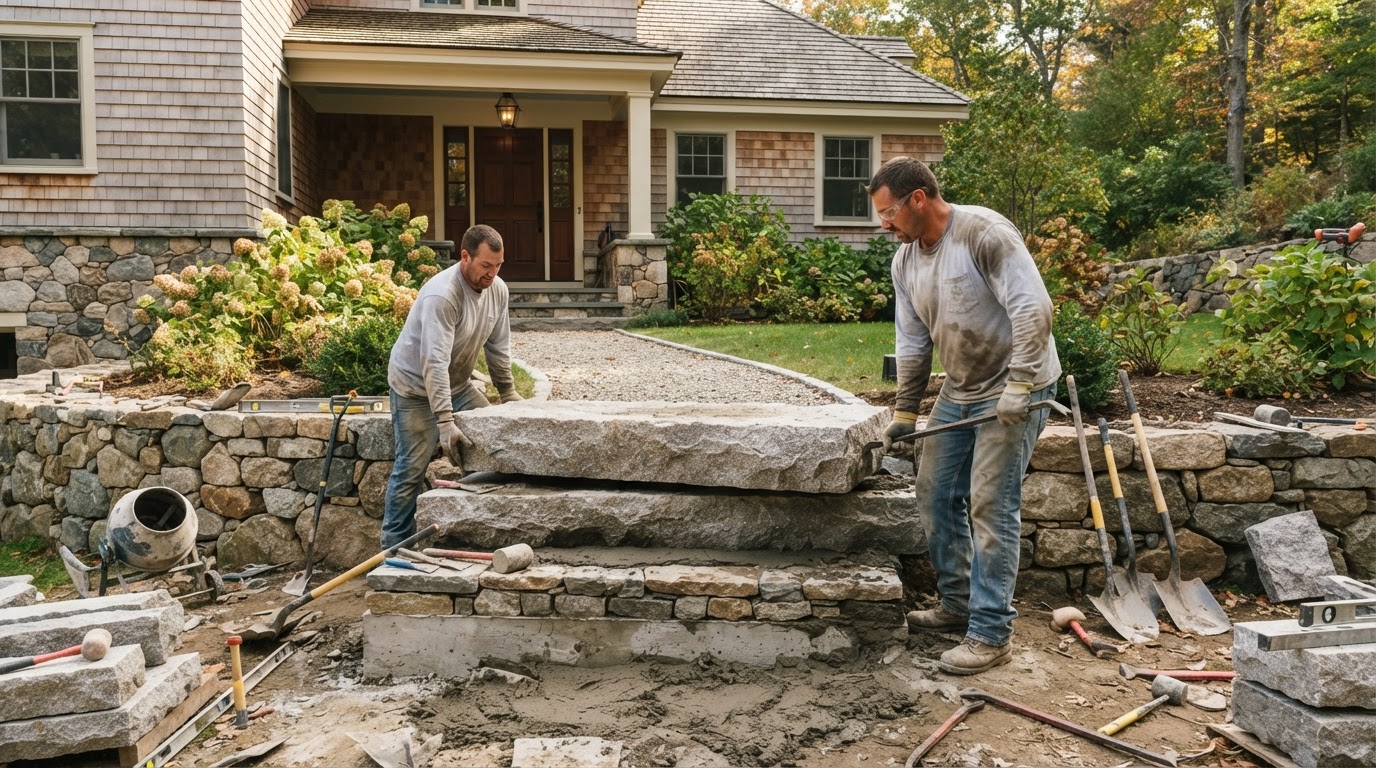
Milford Masonry Pros installs and rebuilds natural-stone and granite steps at residential entries, walkways, patios, and grade transitions in Milford, Massachusetts. With 10+ years of hands-on experience and insured service, we build step assemblies that are stable, safe, and suited to New England properties.
Step work depends on stable support, consistent layout, secure stone placement, landing integration, drainage, existing entry elevations, and transitions. We use granite and natural-stone New England context naturally, and we do not state one universal tread or riser dimension as code or claim commercial accessibility compliance or design credentials.
Why Choose Milford Masonry Pros for Your Masonry Project?
10+ Years Experience
More than a decade of stone step installation across Milford and surrounding Massachusetts communities, from granite entry steps to natural-stone landscape transitions.
Insured
Milford Masonry Pros carries insurance so your property and project are protected while stone step work is underway.
Granite and Natural-Stone Familiarity
Experience handling the weight and character of granite treads and natural stone, selecting and placing units for stable, consistent step assemblies.
Base and Landing Preparation
Stable support and landing preparation are treated as the foundation of the steps, because loose or rocking stones almost always trace back to base or support failure.
Careful Entry and Threshold Transitions
Transitions to door thresholds, walkways, and patios are planned so elevations match and the steps integrate cleanly with the entry and surrounding hardscape.
Drainage Awareness
Drainage at the landing and around the steps is evaluated and managed so water does not undermine the base or create ice hazards at the entry.
Transparent Project Pricing
You see defensible project ranges up front with the real price drivers named, and a written estimate after evaluation.
Local New England Masonry Context
We understand Massachusetts freeze-thaw exposure, granite and natural-stone materials, and the entry and grade conditions common to Milford-area properties.
Our Specialized Stone Step Services
Granite Entry Steps
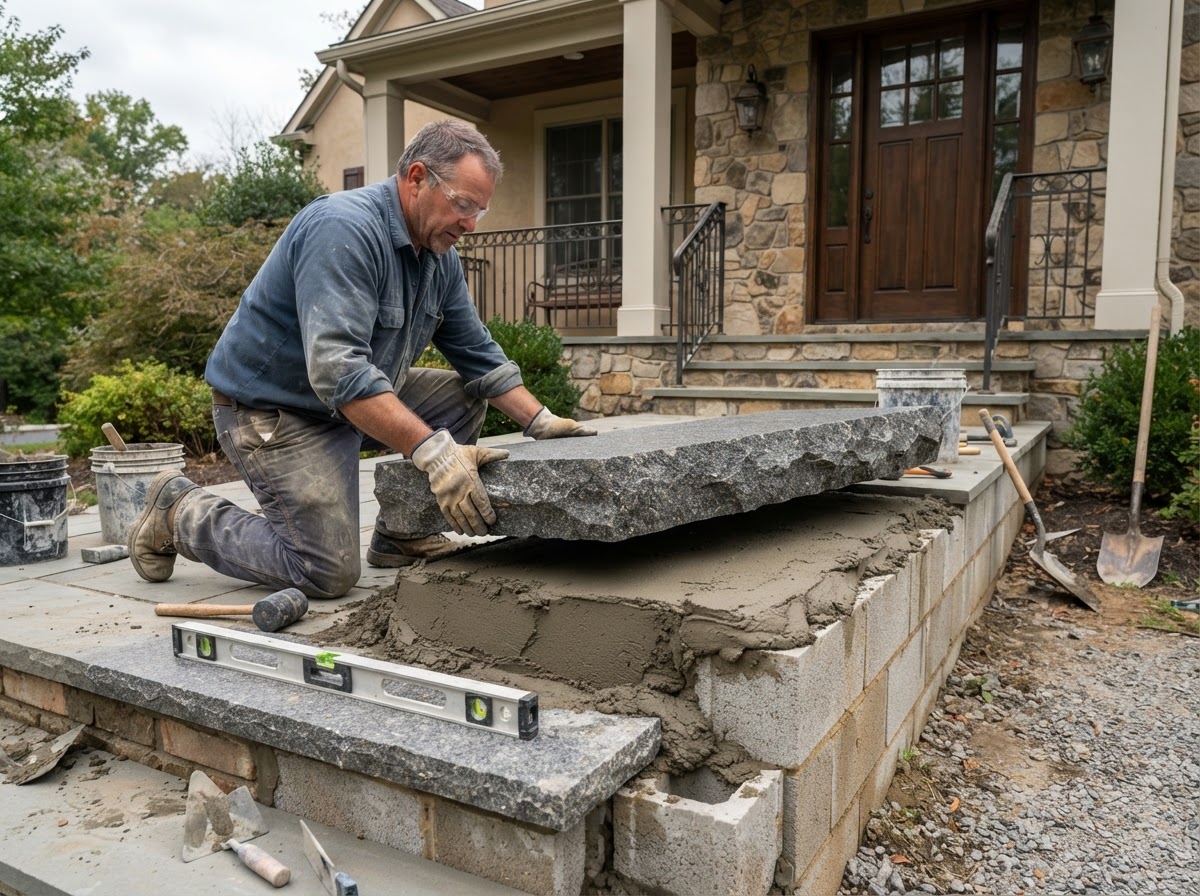
Granite entry steps are installed at front, side, and secondary residential entries where substantial natural-stone treads fit the property and intended use. They apply where durable, heavy stone steps are wanted for a permanent entry.
Construction involves base and support preparation, stone handling, tread and riser layout, landing and threshold transitions, alignment, and drainage considerations. The layout is set to the entry elevations without publishing a DIY dimension guide.
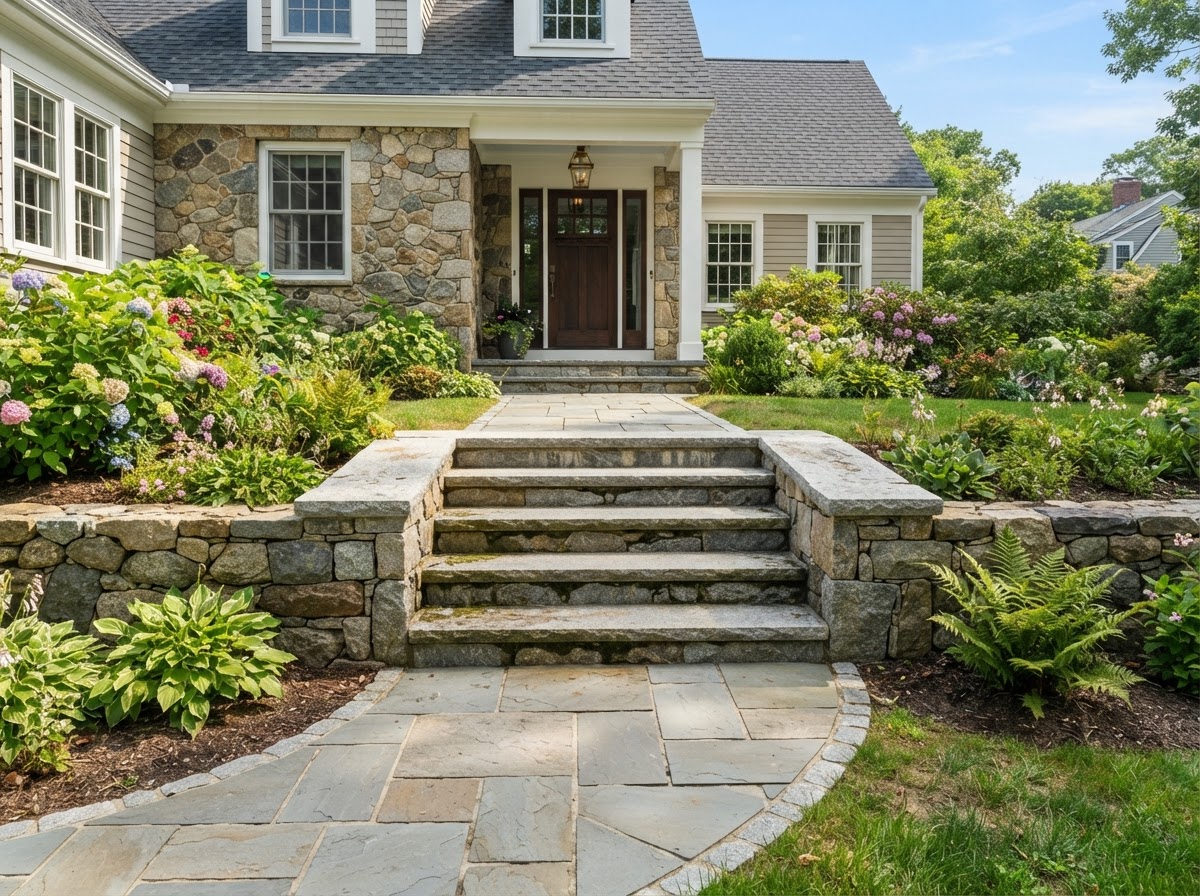
A durable stone entry with consistent placement, solid support, and a finished connection to the walkway or landing that handles New England exposure and foot traffic.
Natural-Stone Landscape Steps
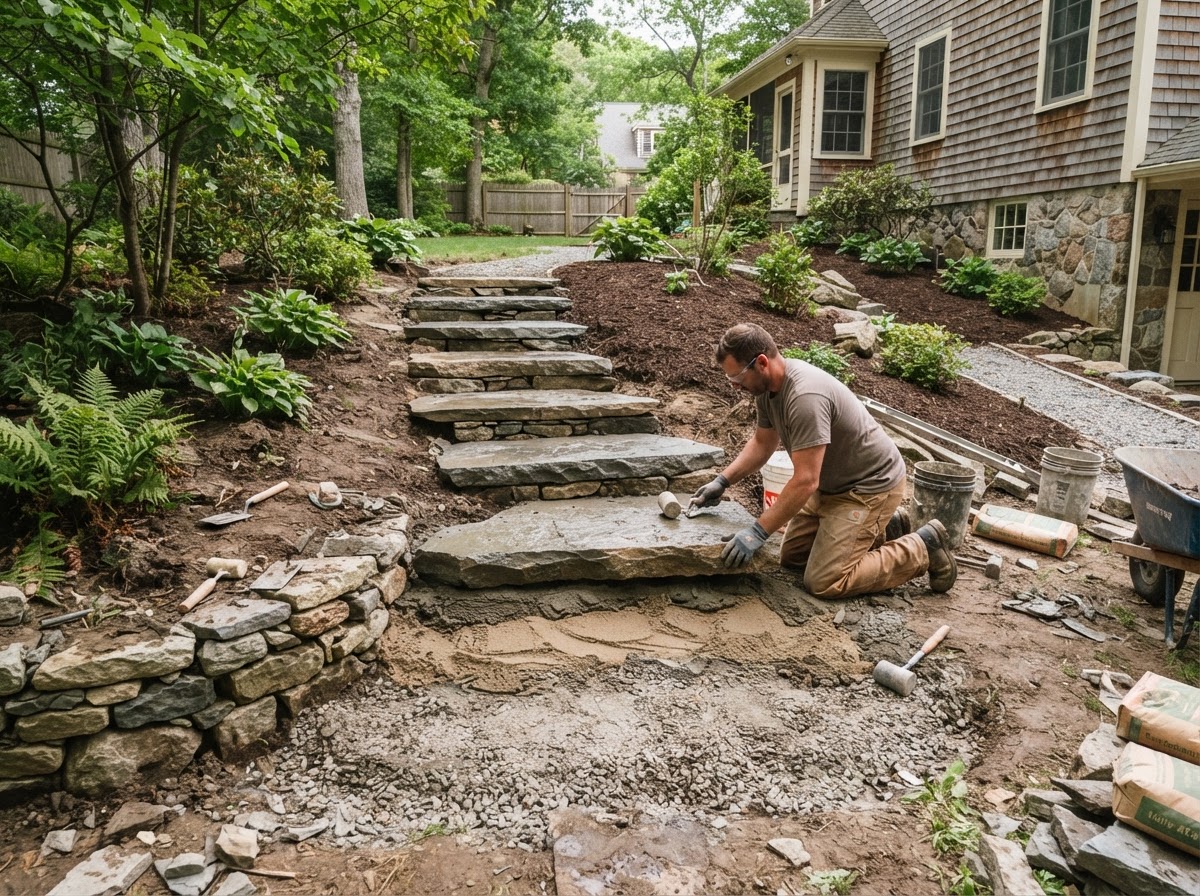
Natural-stone landscape steps are built through moderate landscape grade changes between patios, yards, walkways, gardens, and outdoor-use areas. They apply where a grade transition needs a defined, stable masonry route.
The build uses grade evaluation, stable base, appropriately selected stone units, consistent progression, drainage, and integration with adjacent hardscape so the steps connect the elevations cleanly.
A defined masonry route through a grade transition using materials that visually connect with the surrounding landscape and provide stable footing.
Bluestone Treads and Step Surfaces
Bluestone treads and step surfaces are used where a flatter natural-stone walking surface is appropriate for new or rebuilt step assemblies. They apply where the consistent, flat character of bluestone fits the step design.
Construction involves selecting suitable tread material, supporting the stone, maintaining consistent layout, finishing joints and edges, and integrating the tread with risers and landings as a complete assembly.
A clean natural-stone step surface with regional character and a deliberate connection to nearby patios and walkways, built on stable support.
Stone Step Replacement and Rebuilding
Stone step replacement and rebuilding rebuilds step assemblies with loose stones, settlement, failed mortar or support, poor transitions, or widespread deterioration. It applies when steps have failed beyond simple resetting.
The process includes dismantling failed material as scoped, evaluating and rebuilding the base and support, reusing sound stone where practical, and resetting or replacing units to a coherent layout.
The step assembly is rebuilt around stable support and consistent geometry instead of repeated spot patching, restoring safe, level footing.
Common Stone Step Problems
Settlement or Rocking Stones
Settlement or rocking stones occur when the base or support beneath a tread has failed, allowing the stone to shift under foot traffic. Correcting the base and resetting the stone restores stable, safe footing.
Cracked or Failed Support
Cracked or failed support beneath the steps means the masonry or base holding the treads has deteriorated, risking further movement. Rebuilding the support restores the structural integrity the steps depend on.
Loose Mortar or Joints
Loose mortar or joints between step stones allow water entry and movement, which worsens with freeze-thaw cycling. Repointing or rebuilding the joints seals the assembly and restores stability.
Poor Drainage at the Landing
Poor drainage at the landing allows water to collect at the base of the steps, undermining the support and creating ice hazards. Correcting pitch and drainage protects the base and improves safety.
Awkward Existing Entry or Walkway Transition
An awkward existing entry or walkway transition creates elevation mismatches that affect both safety and appearance. Rebuilding the steps with planned transitions aligns the elevations and improves the connection.
Signs You Need Stone Step Installation or Rebuilding
Individual Treads Move Under Normal Use
Individual treads moving under normal use means the support beneath them has loosened, creating a safety concern. Resetting or rebuilding the affected treads on a corrected base restores stable footing.
Steps Have Settled Unevenly
Steps that have settled unevenly indicate base failure that has allowed the assembly to shift. Rebuilding on a corrected base restores consistent elevations and safe progression.
Stones Are Cracked or Severely Deteriorated
Cracked or severely deteriorated stones may need replacement rather than resetting, as damaged treads compromise both safety and appearance. Replacing the failed stones and correcting the base restores the assembly.
Existing Repairs Keep Failing
Existing repairs that keep failing mean the underlying support or drainage problem has not been addressed. A rebuild that corrects the base and drainage provides a lasting fix rather than another temporary patch.
New Patio or Walkway Needs a Proper Grade Transition
A new patio or walkway that needs a proper grade transition may require stone steps to connect the elevations safely. Integrating steps with the new hardscape creates a clean, stable connection.
Our Stone Step Installation Process
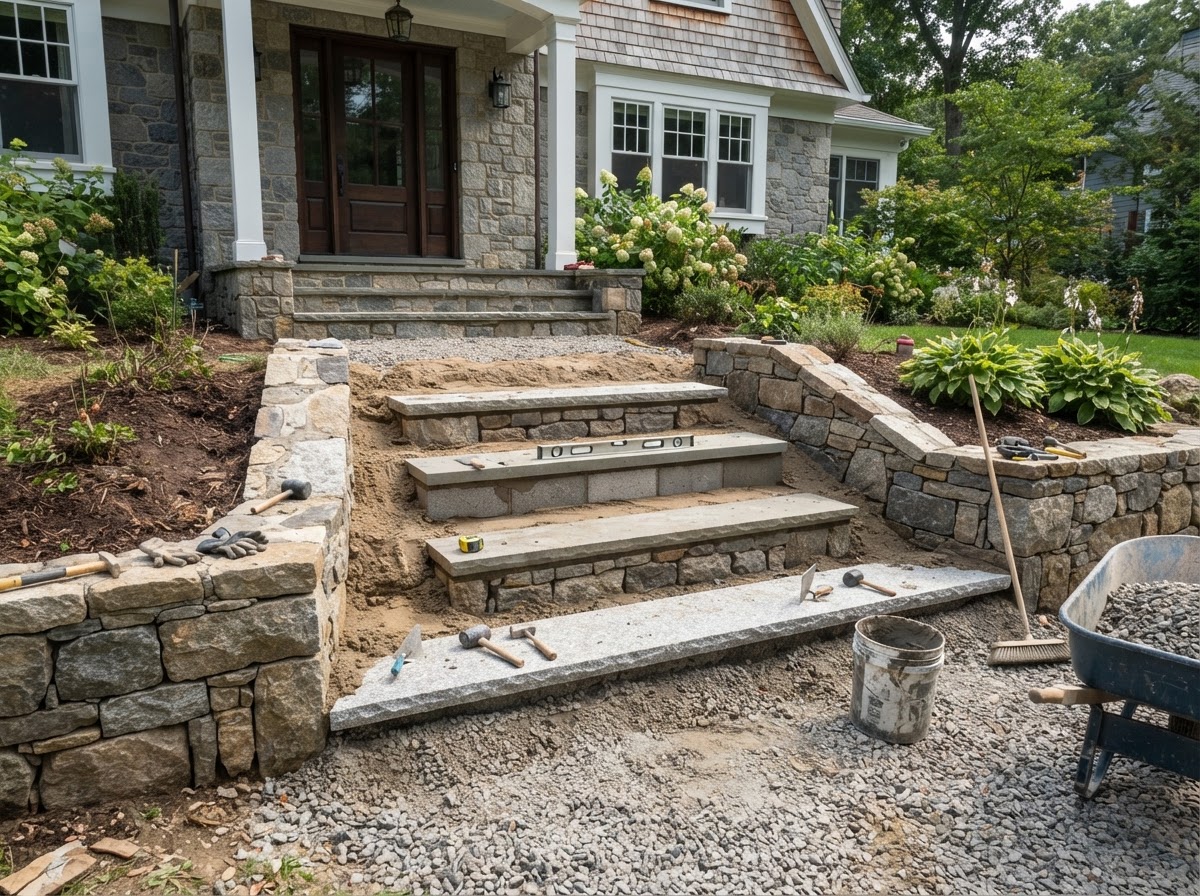
Assessment and Planning
We review entry and grade conditions, number and general layout of steps, landing and threshold transitions, existing materials, drainage, access, and whether applicable permit or code review is needed. The assessment defines the step layout and support requirements.
Removal and Base Preparation
We remove failed existing material where included in scope, prepare stable support and base conditions, and establish project elevations. A sound base or support is what keeps the treads from rocking or settling over time.
Stone Placement and Assembly
We set granite and natural-stone treads and related masonry components according to the approved project layout with stable support, consistent alignment, and appropriate joint and support materials. The assembly is built as a coherent set of steps.
Landing, Drainage, and Quality Control
We complete adjacent landing and walkway transitions, review drainage and edges, clean the work area, and perform a final walkthrough. The review confirms the steps are stable, transitions are clean, and drainage protects the base.
How Much Do Stone Steps Cost in Milford, MA?
Small stone-step repairs or reset work: often about $750 to $2,500
Notes: Number of affected stones, access, base/support condition, mortar, and stone reuse affect cost.
Granite step installation/replacement: often about $2,000 to $6,000+ for smaller residential entry projects
Notes: Number and size of treads, demolition, stone handling, base, landing, access, and threshold transitions affect price.
Larger natural-stone step systems: often about $4,000 to $12,000+
Notes: Grade change, number of steps, stone selection, equipment access, supporting masonry, landings, excavation, and adjacent hardscape drive cost.
Stone steps integrated with a patio or walkway: priced by combined project scope
Notes: Shared excavation/base work can affect project economics, while complex transitions, retaining elements, and premium stone increase cost.
Ranges reflect typical Milford-area market conditions and are provided to help you plan. Your written estimate will reflect your specific property, materials, and scope.
Steps integrated with retaining walls, landings, or complex grade changes can exceed these ranges. Ranges reflect typical Milford-area market conditions; your written estimate reflects your specific property and scope.
Get Your Stone Step Estimate
Tell us about your Milford-area masonry project and we'll follow up with a clear next step.10+ Years Experience · Insured.
Call 508-458-8256Frequently Asked Questions About Stone Step Installation
How much do stone steps cost in Milford?
Small stone-step repairs or reset work in Milford often cost about $750 to $2,500, while granite step installation or replacement runs $2,000 to $6,000+ for smaller residential entry projects. Larger natural-stone step systems can reach $4,000 to $12,000+. Final pricing depends on number and size of treads, stone selection, demolition, base, landings, access, and threshold transitions.
Is granite a good material for exterior steps?
Granite is a good material for exterior steps because it is dense, durable, and resistant to freeze-thaw damage and deicing salt exposure common in Massachusetts. Its weight and hardness provide stable, long-lasting treads, though the material and handling costs are higher than lighter alternatives. Granite fits New England residential entries well.
Can existing stone steps be reset instead of replaced?
Existing stone steps can often be reset instead of replaced when the stones are sound and the problem is base or support failure rather than the stone itself. Resetting on a corrected base restores level, stable treads while preserving the original material. Cracked or severely deteriorated stones may need replacement.
Why do stone steps become loose or uneven?
Stone steps become loose or uneven most often because the base or support beneath them has settled, eroded, or failed, allowing the stones to shift or rock. Freeze-thaw cycling, poor drainage at the landing, and failed mortar or support also contribute. Correcting the base and drainage is what keeps the steps stable.
Can stone steps be added to an existing patio or walkway?
Stone steps can be added to an existing patio or walkway when a grade transition is needed and the existing hardscape can support the connection. The steps are integrated with the existing surface through matching elevations, landings, and transitions so the addition reads as part of the original design.
Does stone-step work require a permit in Milford?
Stone-step work in Milford may require a permit depending on location, scope, entry configuration, and applicable local requirements. Steps that are part of a larger project or that affect an entry may trigger review, while simple replacement often does not. Milford Building & Inspections is the local authority for project-specific requirements.
How do I request a stone-step estimate?
To request a stone-step estimate, call 508-458-8256 or submit the estimate form on this page with your name, phone, email, project address, and service request. We review your request, schedule a site evaluation to review entry and grade conditions, and follow up with a clear written estimate and next steps.
Request Stone Step Installation in Milford, MA
Ready to move forward? Call now or send your details and we'll help you take the next step with confidence. 10+ Years Experience · Insured.
Call 508-458-8256Related Masonry Services
Prefer to talk it through? Call 508-458-8256.